A competition like no other
The TAC Challenge serves as a bridge between education, research, and industry, giving students hands-on experience with cutting-edge technology while fostering collaboration, innovation, and problem-solving under real operational conditions.
Teams from around the world design, build, and operate marine robotic systems to solve real-world engineering challenges. This year's tasks included power-puck docking, pipeline following, ArUco detection, and subsea structure operations involving valve manipulation and ArUco detection.
Subsea docking to TAC docking station
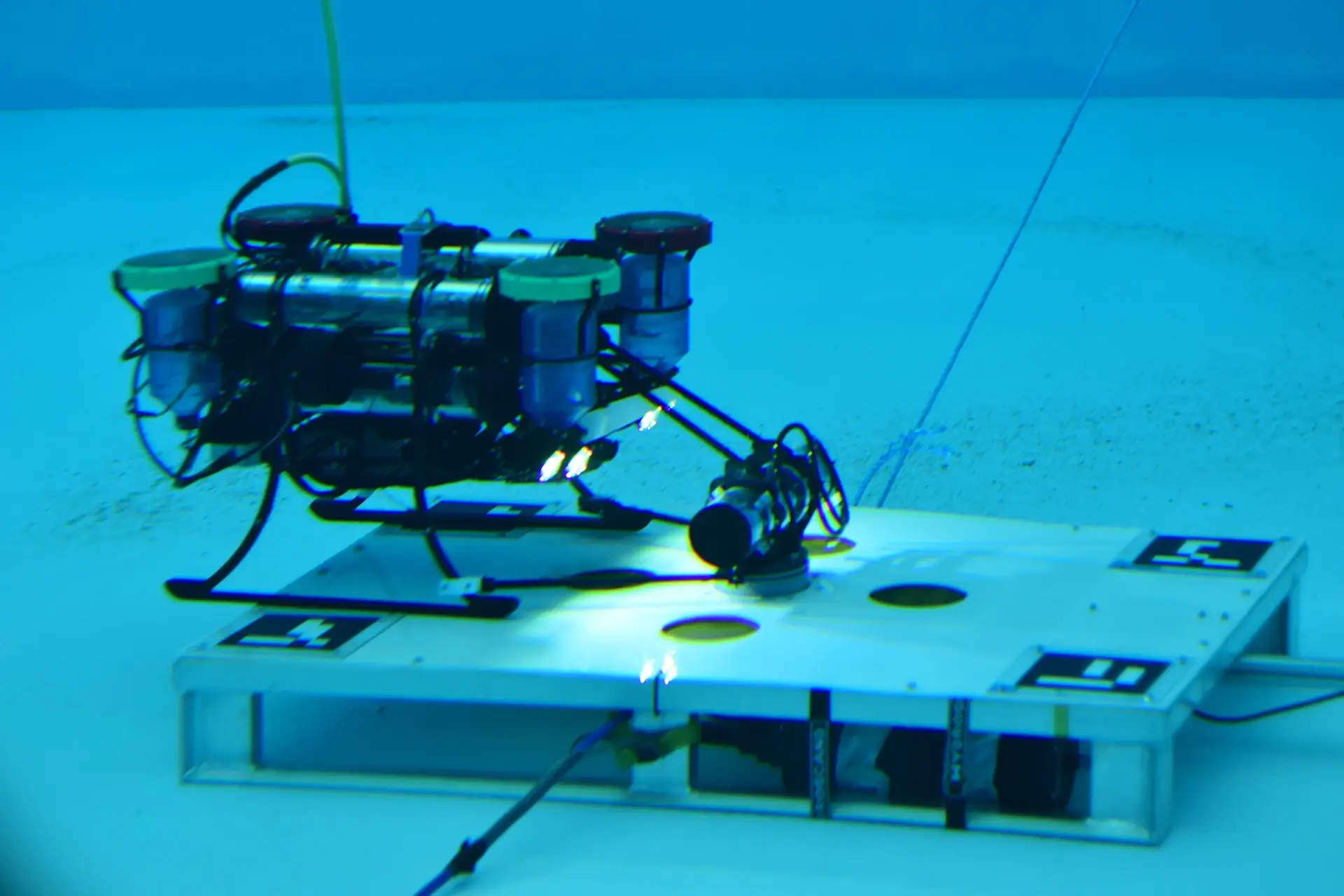
To extend the operation time, underwater docking is used at a charge station. This is simulated in the challenge, where our AUV must (autonomously) locate and dock with the TAC docking station on the seafloor to light up the power indication light.
To do this, we launched the vehicle in the pool, where it first had to stabilize using our innovative buoyancy system before submerging. We then positioned the AUV remotely above the docking station, where we successfully made contact and activated the indicator light.
Pipeline inspection
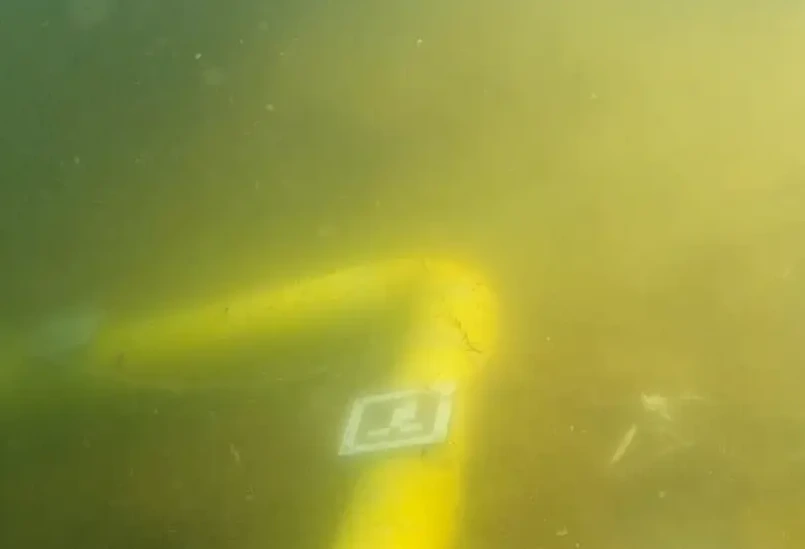
Another critical task in the competition is pipeline inspection, in which our AUV must survey a section of subsea pipeline and detect ArUco markers placed along its length. Our AUV was successfully maneuvered to the starting point and navigated along the pipeline. During this operation, it accurately detected and read each marker encountered along the route.
Intervention and manipulation
After locating the subsea structure and detecting the ArUco markers, a horizontal and a vertical valve had to be manipulated and closed. To accomplish this, the hydraulic arm was extended, allowing us to close the vertical valve with ease. The horizontal valve proved more challenging due to reduced visibility; however, after careful maneuvering, it was successfully closed as well.
Meet the team
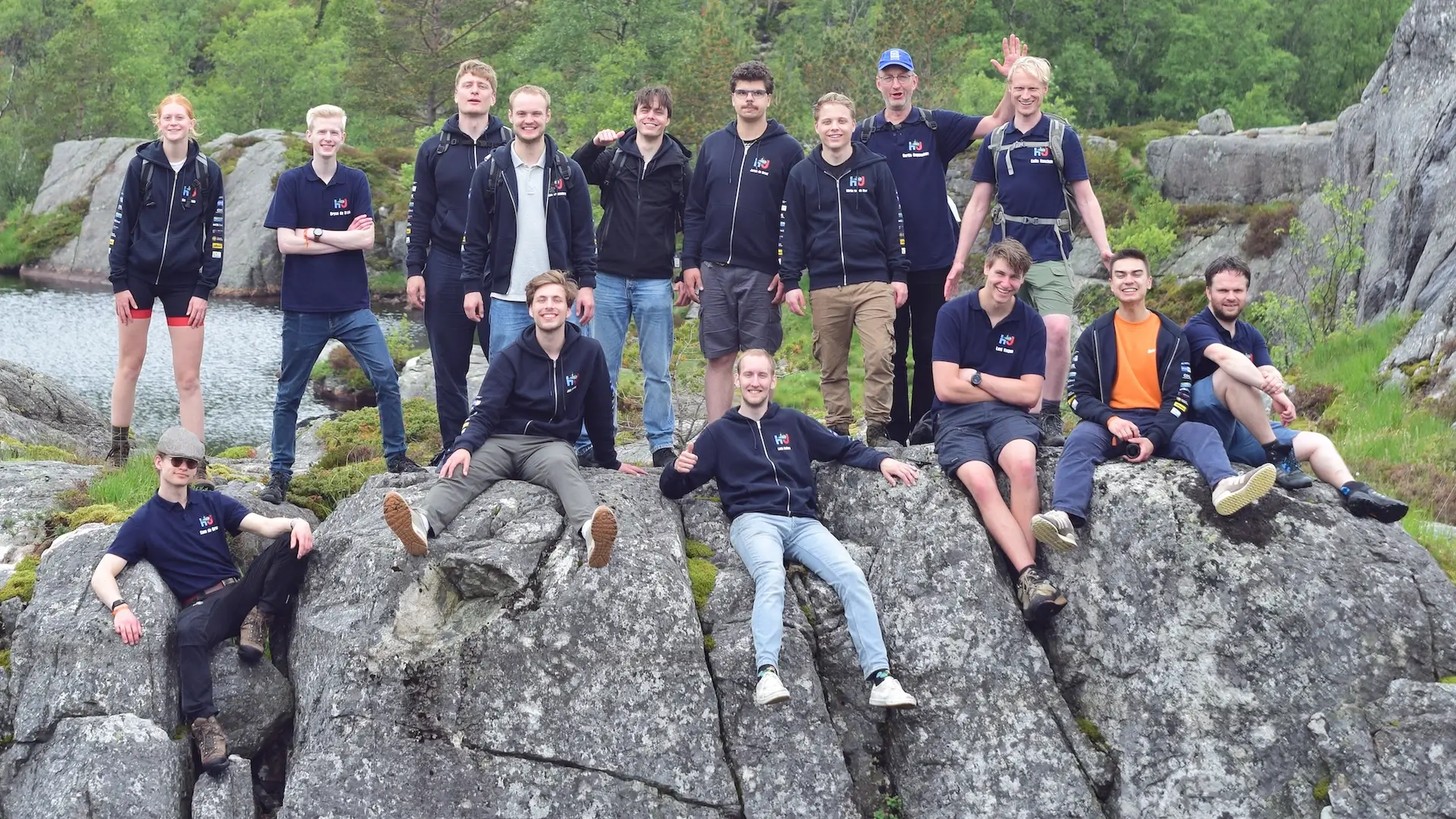
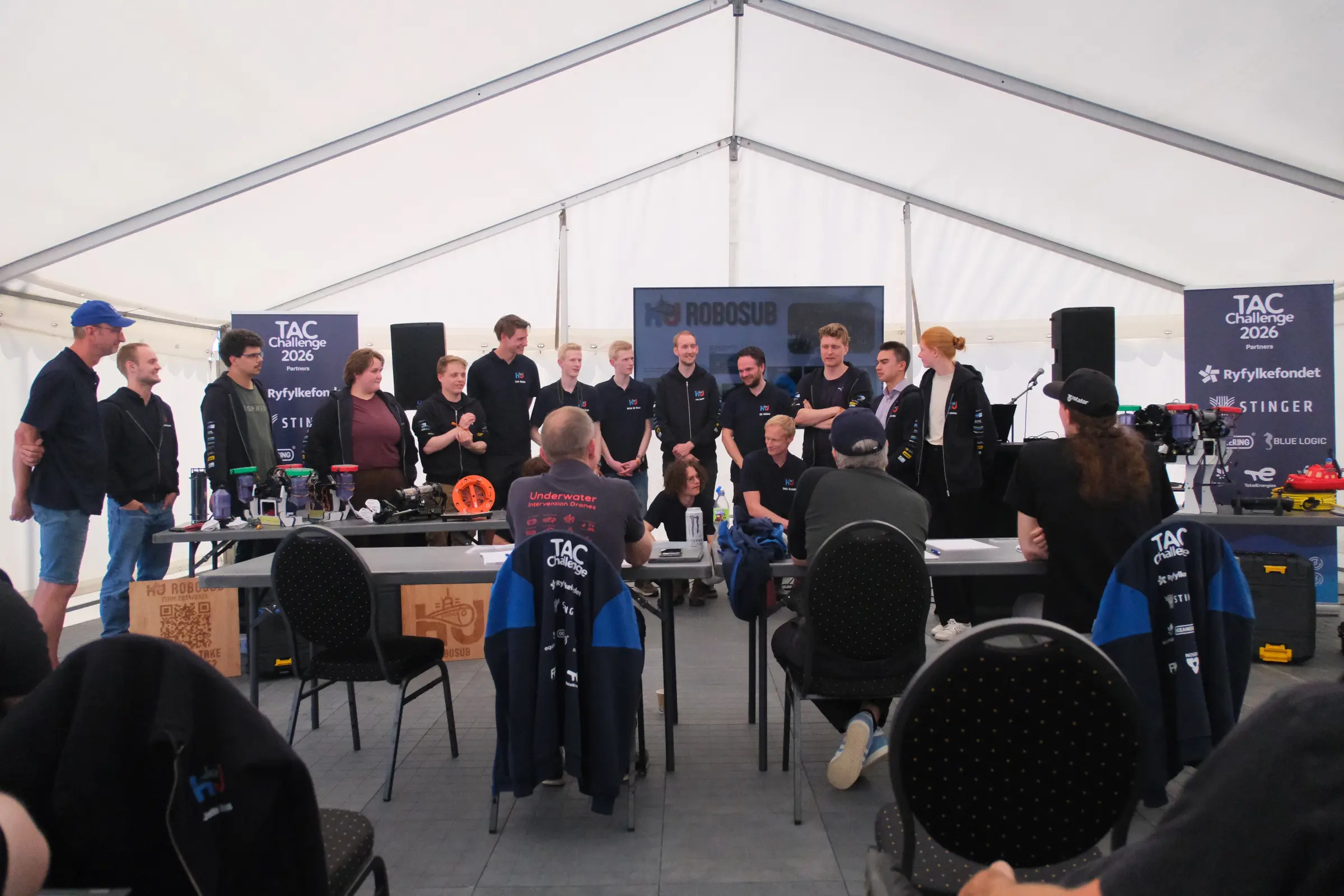
This is the team that took on the TAC Challenge in 2026, securing the prize for most innovative robosub for the second year in a row!